Not all online courses are created equal. In 2026, the rise of AI-generated content and mass-produced programs has made it harder than ever to separate high-quality courses from low-value ones.
Some courses promise fast results but deliver outdated or surface-level information. Others are simply repackaged free content with a premium price tag.
This guide will help you identify low-quality online courses before you buy — so you can invest your time and money wisely.
1. Vague Promises Without Clear Outcomes
If a course claims “make money fast” or “guaranteed success” without explaining the process, it’s a red flag.
High-quality courses clearly explain:
- What skills you will learn
- What results are realistic
- How the process works step-by-step
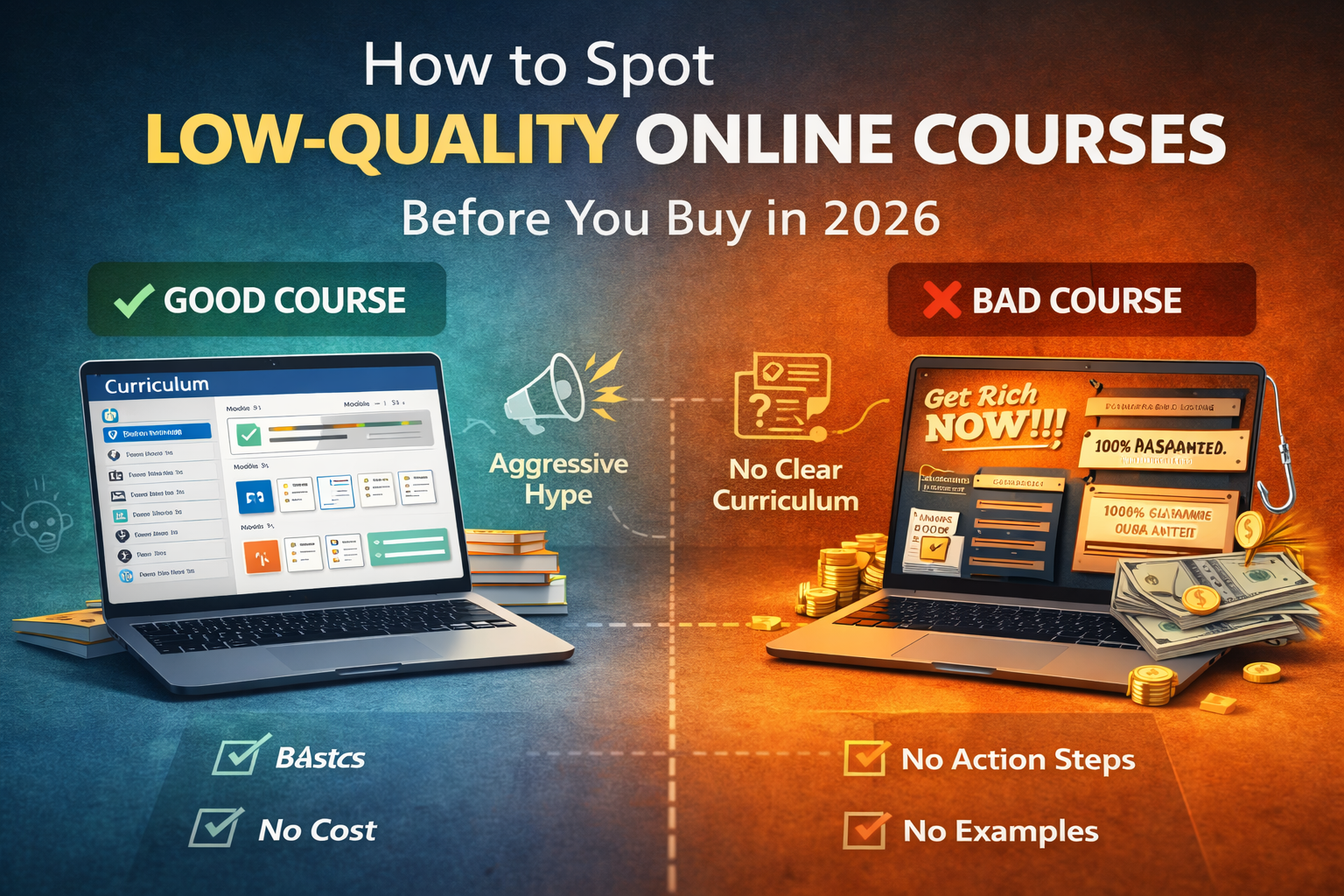
2. No Clear Curriculum or Structure
A serious course always includes a structured roadmap. If you can’t see modules, lessons, or progression — be cautious.
- No module breakdown
- No learning path
- No clear progression from beginner to advanced
Structure is what turns information into skill.
3. Overly Aggressive Marketing
If the sales page focuses more on hype than actual content, that’s a warning sign.
Watch out for:
- Fake urgency (“only today” repeated daily)
- Unrealistic income screenshots
- Emotional pressure tactics
Quality courses sell through clarity — not pressure.
4. No Real Examples or Case Studies
Good courses show real-world application. Low-quality courses stay theoretical.
- No practical walkthroughs
- No case studies
- No real results explained
Without examples, you’re left guessing how to apply what you learn.
5. Outdated Content
In industries like AI, trading, and digital marketing, outdated content can be useless or even harmful.
- Old tools no longer relevant
- Strategies that no longer work
- No updates or revisions
Always check if the course reflects current trends and platforms.
6. No Actionable Frameworks
Low-quality courses often explain concepts but don’t show you how to execute them.
High-quality courses include:
- Templates
- Checklists
- Step-by-step systems
Without these, implementation becomes difficult.
7. Lack of Transparency
If you don’t know what you’re getting before buying, that’s a major warning sign.
- No preview of content
- No breakdown of lessons
- Unclear delivery format
Transparency builds trust. Lack of it destroys it.
How to Choose Better Courses Instead
To avoid low-quality programs, focus on:
- Clear structure and modules
- Up-to-date content
- Real-world examples
- Actionable systems
- Logical progression
The best courses don’t just teach — they guide you through execution.
Final Thoughts
In 2026, the biggest risk isn’t buying a course — it’s buying the wrong one.
Take your time. Analyze the content. Focus on structure and value.
The right course can accelerate your progress. A low-quality one will only waste your time.